Preserving River Sámi culture and salmon fishing in Deatnu/Tana watershed valley (Norway)
Summary of report from the Sharing Our Knowledge project in response to: Joint hearing on preservation of salmon fishing culture (the Sámi Parliament) (Norway)
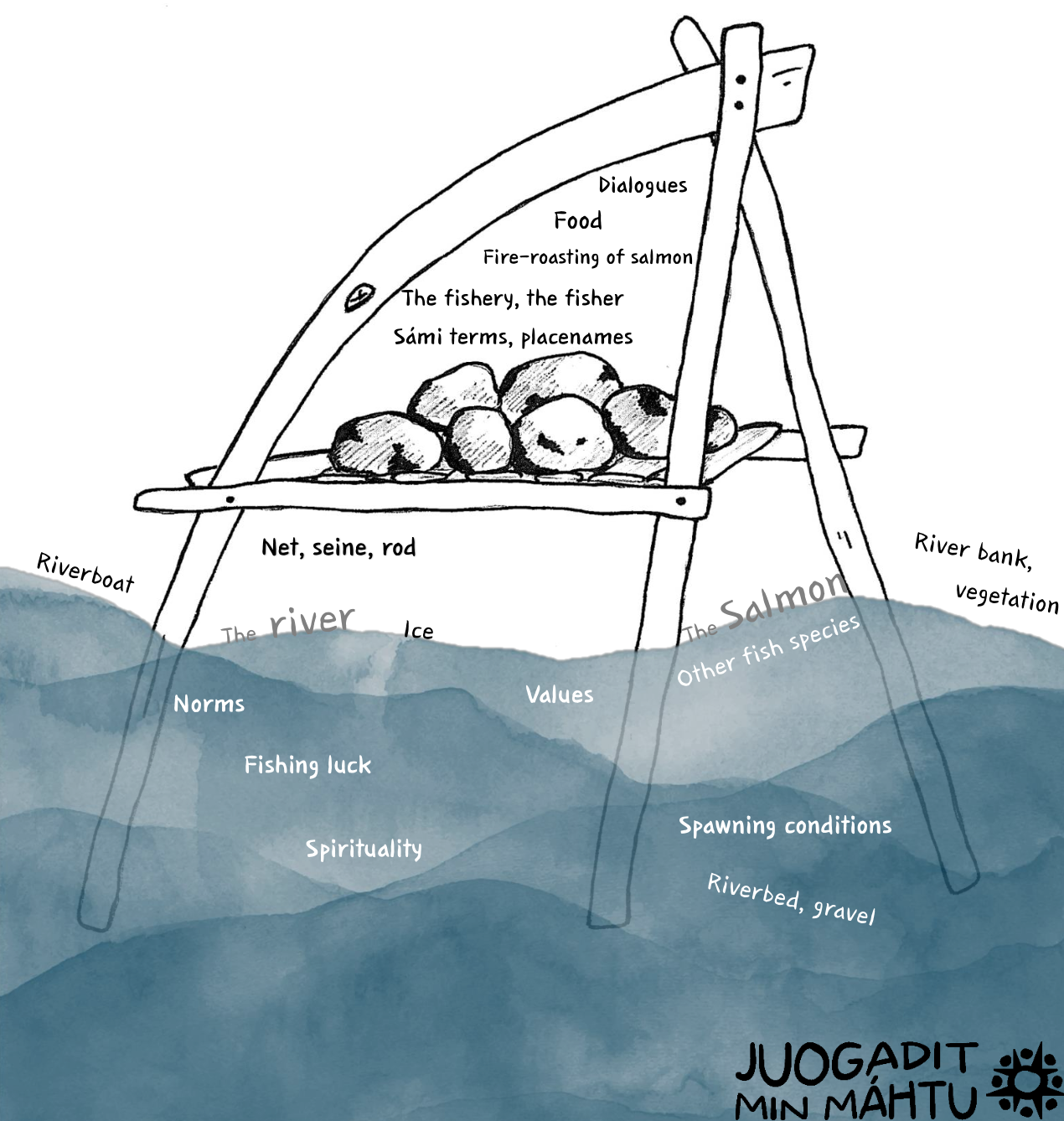
The project Sharing Our Knowledge (In sámi Juogadit min Máhtu) has submitted a report in response to the Ministry of Climate and Environment (Norway) and the Norwegian Sámi Parliament's joint hearing of a plan for the preservation of Sámi salmon fishing culture. The report was written by Camilla Brattland, Tommy Ose, Kia Krarup Hansen and Laila Pellennec (Arctic University Museum of Norway, UiT Norwegian Arctic University of Norway) in collaboration with Hege Persen (Visitor center wild salmon Tana - Joddu AS) and Harald Gaski (DeanuInstituhtta). The report is based on input from a series of salmon dialogues, interviews and experiences from international gatherings with other river Indigenous peoples in Karasjok, Tana (Norway), Utsjoki (Finland) and Unama’ki (Canada). The focus of these activities have been the preservation of salmon and Indigenous salmon fishing culture and knowledge in a context of climate crisis and dwindling salmon stocks.
The report underlines that river Sámi culture consists of many visible and invisible parts and can be preserved in various ways, but that fishing is a necessary material basis for the practice of culture. Through a separate "reŋko model" for the preservation of culture, the report shows how the practice of culture, such as the use of a river boat, fishing for salmon (bivdit), setting up salmon weirs (buođđut), and roasting salmon on a fire by the riverbank, rests on traditional knowledge, values, norms and spiritual practices that are central to river Sámi culture. A reŋko is a wooden construction that is placed in a row in the river as part of the traditional salmon weir (buođđu). Sámi salmon fishing culture depends on healthy salmon stocks, and rests on the existence of a harvestable surplus. Parts of the culture can be preserved and transferred through fishing for other species or activities that do not involve fishing. However, there are already far-reaching negative social consequences of the ban on salmon fishing for river Sámi culture and health, including the removal of both food culture and community meeting places. It is of crucial importance to ensure the transfer of knowledge through practice to younger generations to ensure that river Sámi culture is preserved.
The input emphasizes that the river Sámi culture in the Deatnu/Tana watershed valley has a special status and indicates that recognition of a culturally based right to fishing and participation in management is important for strengthening self-determination and cultural practice. The project has had a special focus on the traditional knowledge about changes in the watercourse considering climate change and the invasion of new species such as pink salmon. Natural conditions, river Sámi cultural practice and values are holistically integrated into each other, and are expressed through, among other things, food culture, sharing, skills, crafts, place names, yoik (Sámi vocal art), stories and rituals. The project has produced a new yoik as a model of these relations in the river Sámi culture. For the river Sámi culture (and the reŋko) to stand firm, an integrated perspective on the management of the watercourse and the communities on all sides of the watershed and the border between Norway and Finland is needed. This includes that traditional knowledge, at a higher level and in collection of knowledge, is taken into account on an equal footing with scientific knowledge. The hearing summarizes preliminary experiences and reflections from the Sharing Our Knowledge project, with associated recommendations:
Support initiatives for the inclusion of traditional knowledge in research and Indigenous-led research such as a Council for Traditional Sámi Indigenous Knowledge and River Sámi Culture
Establish an Indigenous management area, cultural conservation area or biosphere reserve, including a Sámi-led salmon knowledge and cultural house
Support local organizations and knowledge carriers who document and maintain Sámi knowledge and culture in the Deatnu/Tana watershed valley
Support education of young people and the transfer of traditional knowledge to new generations